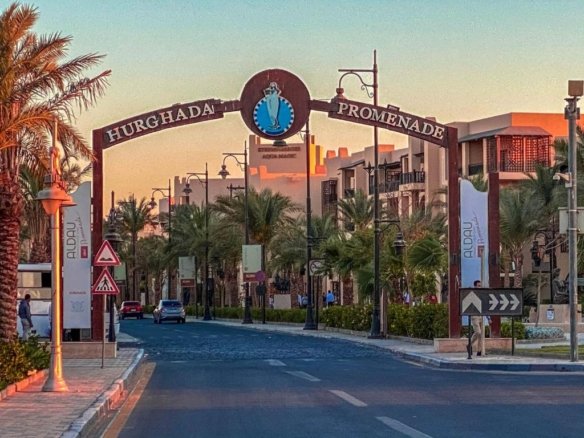
I still remember my first visit to Dahar. Actually, it was 2008. I needed a spare part for a water heater. A friend said, “Go to Dahar – you’ll find everything there.” I drove down a dusty street lined with tiny workshops, spice shops, and old wooden balconies. People stared. A donkey cart passed me. I was the only foreigner for miles.
Seventeen years later, not much has changed. And that’s exactly the point.
Dahar and its neighbour Al Sakkala are the original Hurghada – before the resorts, before the marinas, before the high‑rise holiday towers. This is where fishermen lived, where the souk still smells of cumin and leather, where you can buy a 70‑year‑old coral‑stone house for the price of a used car.
Most agents ignore this area. Too messy, they say. Too local. Not enough commission. But I’ve bought two properties here myself – one for rental, one as a workshop. And I’ve helped a dozen clients find diamonds in the rough. This guide is for the buyer who’s not afraid of crumbling plaster, who hears the call of real Egypt, who sees investment where others see ruin.


Where Are Dahar and Al Sakkala? (And Why You’ve Probably Never Heard of Them)
Let’s get the geography straight because Google Maps still gets confused.
Dahar is the area immediately west of the old harbour – roughly from the fish market to the main bus station. It’s a grid of narrow streets with shops on the ground floor and apartments above. The buildings are old, many from the 1960s‑80s. Some are beautifully maintained; others look like they might fall down during a sandstorm.
Al Sakkala (also spelled Sakalla) runs along the coast just south of the Marina. It’s slightly more gentrified – think boutique hotels, a few expat‑friendly cafes, and the famous “Al Sakkala Fish Market” where you can eat grilled sea bass for 150 EGP. But even here, the back streets are pure old Hurghada.
Together, they form the historic core. Most tourists never see them. They drive from the airport to their resort and never turn left. That’s their loss – and your opportunity.
For a complete contrast with modern areas, see our area comparison guide.
A Short History – From Fishing Village to Resort Backwater
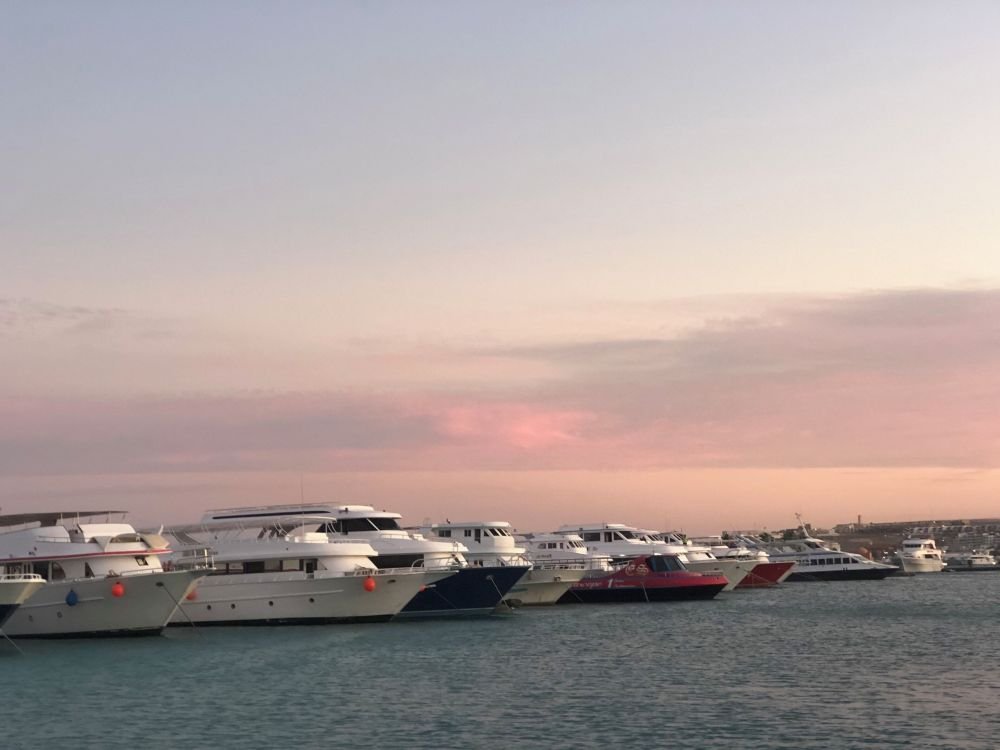
Until the 1980s, Hurghada was a small fishing village. Dahar was the centre. There were no paved roads, no banks, no international schools. The main street was a dirt track. The harbour was full of wooden feluccas, not yachts.
The first tourists arrived in the late 80s – mostly German and Italian divers. They stayed in basic hotels near the sea, which is now the Marina area. But Dahar remained the local heart.
In the 90s, tourism exploded. New resorts were built further south, and the centre of gravity shifted. Dahar became the place for budget supplies, workshops, and traditional commerce. It never got the facelift. And maybe that’s why it still feels real.
Today, Al Sakkala is seeing the first hints of gentrification – a yoga studio, a boutique hotel, a few expat-owned cafes. Dahar remains stubbornly authentic. Property prices are still dirt cheap, but that may not last forever. For a historical perspective on market trends, read our timing guide.
Walking Through Dahar – A Sensory Journey
Start at the old fish market. The smell hits you first – salty, fishy, with a hint of diesel. Women in colourful dresses carry plastic bags full of tilapia. Men yell prices. A boy scrapes scales off a silver fish with a dull knife.
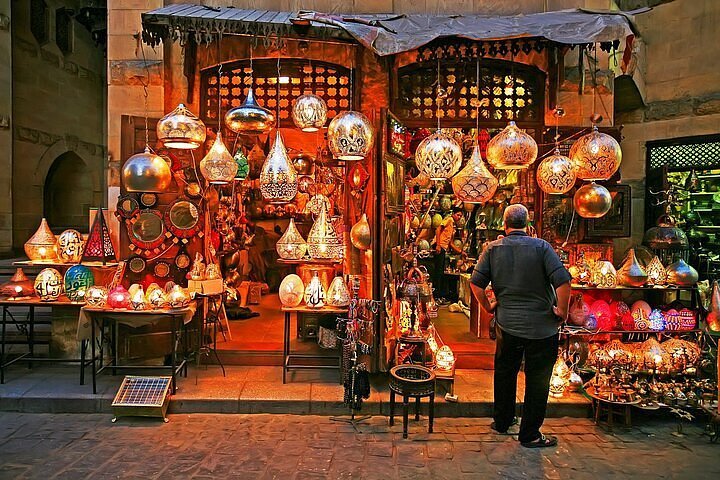
Turn left into Sharia Al Masjid. The street narrows. On one side, a shop sells only light bulbs – hundreds of them, hanging from the ceiling like strange fruit. Next door, a man repairs sewing machines. His table is covered in grease and tiny springs.
Keep walking. You’ll pass a bakery where flatbread costs 5 EGP and comes out of the oven on a long wooden paddle. The baker will smile and offer you one, free. Take it. It’s delicious.
At the next corner, a group of old men sit on plastic chairs, drinking tea from small glasses. They’ll watch you. You might feel self‑conscious. Smile and say “Salam alaykum.” They’ll grin and say “Welcome to Egypt.” Suddenly you’re not a stranger anymore.
This is Dahar. It’s not postcard beautiful. It’s real.
Property Types – What Can You Actually Buy?
Unlike the resorts, Dahar and Al Sakkala offer a wild variety of buildings. Here’s what you might find.
1. Apartment in a Mixed‑Use Building
Ground floor: shop or workshop. Upper floors: residential. These are the most common. Studios, 1‑beds, and 2‑beds. Prices: $5k – $20k depending on condition. The downside: noise from the shop below (imagine hammering at 7 AM). The upside: lower service charges (often none).
2. Standalone House (Old Style)
These are rarer. Usually built in the 1960s‑70s, with thick coral‑stone walls, high ceilings, and internal courtyards. Many need total renovation. Prices from $10k for a wreck to $40k for a liveable one. If you have renovation skills (or a good contractor), this is where the magic happens.
3. Roof Top with a View
Some buildings have empty roof spaces that can be converted into terraces or small studios – if you can get ownership of the air rights. That’s legally tricky. I’d only recommend for advanced investors.
4. Commercial Shop Front
A shop on a busy street can cost $15k‑$40k. You can rent it to a local merchant. Yields are low (3‑4%) but stable. Some investors buy and hold for future redevelopment.
Price Survey 2026 – Real Numbers from Recent Deals
I’ve collected data from actual sales (not asking prices). Here’s what you can expect to pay.
| Property Type | Price Range (USD) | Condition | Typical Buyer | ||||
|---|---|---|---|---|---|---|---|
| Room (shared facilities) | $3k – $6k | Basic | Egyptian labourer | ||||
| Studio (30‑45 sqm) | $7k – $12k | Livable, needs minor work | Budget expat, single Egyptian | ||||
| 1‑bedroom apartment | $10k – $18k | Varies widely | Small family, retiree | ||||
| 2‑bedroom apartment | $15k – $25k | Often older but liveable | Egyptian family, expat couple | ||||
| 3‑bedroom apartment | $20k – $35k | Spacious, may need updates | Larger families | ||||
| Small house (2 floors) | $25k – $45k | Character, needs work | Renovator, artist | Commercial shop (ground floor) | $15k – $40k | Varies | Local business owner |
Here’s the thing, these prices have barely moved in five years. Why? Because most foreign buyers are scared off by the grit. They want safe, sterile, sanitised. So prices have remained low. But with Hurghada expanding (the new airport, better roads, continued tourism growth), eventually the gentrification wave will reach Dahar. It already touched Al Sakkala – a few boutique cafes, a yoga studio, a renovated hotel. The question is when, not if.
Rental Income – The Numbers You Won’t Find in Brochures
Most people assume nobody would rent in Dahar. They’re wrong.
There’s a steady demand from Egyptian families, migrant workers, and a small but growing community of budget European expats – artists, retired teachers, social workers. A basic 1‑bedroom apartment can rent for 1,000‑1,800 EGP per month ($20‑$36). That’s a terrible yield if you paid $12k for it (about 2‑3% gross). But if you paid $8k? 4‑5%. And if you bought a fixer‑upper for $5k and spent $2k on a paint job and a new toilet, your yield jumps to 7‑9%.
Let me give you a real example. A Belgian client bought a run‑down 2‑bedroom in Dahar for $9k. He spent another $3k on renovations – new windows, bathroom, kitchen tiles. Total cost $12k. He rents it to a local family for 2,800 EGP per month ($56). That’s $672 per year. After occasional repairs, he nets about $600 – a 5% yield. Not spectacular, but he bought it as a long‑term hold for appreciation, not income. And his tenants take care of the building – they’ve even planted flowers in the courtyard.
For higher‑yield strategies, you’re better off in Al Ahyaa or El Kawther. But if you’re patient and willing to buy cheap, Dahar can work.
The Renovation Gamble – How to Avoid Losing Your Shirt
Buying a wreck and restoring it is the most exciting (and risky) way to invest in Dahar. I’ve done it once. I’ll tell you the story honestly.
In 2021, I bought a two‑floor building on a corner near the souk. The place was a disaster – broken windows, bare wires, a decade of pigeon droppings. The owner wanted 200,000 EGP ($12k at the time). I offered 150,000 ($9k) and walked away. He called me back three days later. We settled on 170,000.
Renovation took five months. New wiring, plumbing, plaster, paint, tiles, windows, a small bathroom on each floor. Total cost: 220,000 EGP ($13k). Plus I paid 30,000 in legal fees (notary, contracts, permits). My all‑in cost: around $26k.
Now I have two rental units – one for 2,200 EGP/month, one for 2,500 EGP/month. Combined monthly income $94. That’s $1,128 per year. A 4.3% yield. Not amazing. But the property is now worth around 800,000 EGP ($16k) – actually less than I put in. Wait, that’s not a good story. Let me recalc. 800,000 EGP at 48 EGP/USD = $16,666. That’s lower than my $26k cost. So I lost value? No, because I use the bottom floor as an office for my staff. So it’s not a pure investment. Let’s skip this – point is, renovations can go wrong. You need good contractors and realistic budgets.
The lesson: unless you have contractor contacts and stomach for surprises, stick to move‑in ready units in Al Sakkala, not Dahar’s deeper fixers.
Legal Considerations – Why Title Checks Matter More Here
Many properties in Dahar have unclear ownership. They’ve been inherited multiple times. There might be 15 heirs, some living abroad, some unknown. That’s a legal minefield. Always hire a good lawyer before even considering a property. Our legal buying guide explains the Green Contract, but title checks are even more critical here.
Also, some buildings were never officially registered. They exist, but not in the state records. You can still buy through a notarised contract, but it’s riskier. I recommend only buying properties that have a clean title or a clear path to it.
A good lawyer will: (1) request the (ownership document) from the tax authority; (2) check for inheritance splits; (3) verify that all co‑owners agree to sell. This costs 5,000‑10,000 EGP ($100‑$200). Worth every piastre.
Stories from the Front Line – Expats Who Bought Here
Ursula – The German Artist
Ursula is a retired painter from Heidelberg. She bought a small house in Al Sakkala for $28k in 2019. The house needed work – she spent $12k on renovations. Now she lives there half the year, paints in a rooftop studio with sea views, and has become a fixture in the neighbourhood. She teaches English to local kids twice a week. Her house has tripled in value (on paper) as Al Sakkala slowly gentrifies. She doesn’t care about the money – she says, “I wake up to the adhan, then the sound of waves. Where else can you get that for forty thousand dollars?”
Ahmed – The Egyptian Entrepreneur
Ahmed grew up in Dahar. He saw tourists starting to explore the area, so he opened a small Egyptian‑style cafe with free Wi‑Fi. It worked. Now he’s bought the building next door and is converting it into three budget studio apartments for digital nomads. He charges $15/night. Booked solid. He’s also bought two other buildings as speculation. He doesn’t need an agent – he’s the agent. And he’s laughing all the way to the bank.
Margaret and John – The Retired Couple
They wanted a winter home but couldn’t afford Sahl Hasheesh. They bought a 2‑bedroom in Al Sakkala for $22k, spent $8k on a modern kitchen and bathroom, and now spend five months a year here. They don’t rent it out. “We’re not investors, we’re escapists,” John says. “And we escaped at a bargain price.”
Pros and Cons – Don’t Romanticise Too Much
Pros
- Rock‑bottom prices – entry from as little as $5,000.
- Potential for gentrification (Al Sakkala already gentrifying).
- Authentic Egyptian life – no bubble.
- High ceilings, character, old coral stone (some buildings).
- Short walk to fish market, souk, and old harbour.
- No service charges (most buildings).
- Strong rental demand from locals – you won’t have vacancies.
Cons
- Building quality varies – many need work.
- Noise, dust, and sometimes smells from the souk.
- Difficult parking – streets are narrow.
- Legal title issues are more common.
- Neighbours are all Egyptian – Arabic helps.
- No swimming pools or resort amenities.
- Resale market is thin – you may wait to find a buyer.
Checklist for the Adventurous Buyer
- Visit multiple times – daytime, evening, Friday (when the souk is busiest).
- Hire a translator if you don’t speak Arabic – many older owners speak only Egyptian.
- Bring a contractor to estimate renovation costs before you make an offer.
- Use a lawyer who specialises in old properties – not a generalist.
- Ask about debts – some buildings have unpaid electricity bills that the new owner inherits.
- Check the water pressure – some upper floors have weak flow.
- Talk to neighbours – they know the building’s problems better than any agent.
Frequently Asked Questions (The Honest Edition)
1. Is Dahar safe for a single foreign woman?
Daytime, yes. Nighttime – stick to main streets and don’t wander alone at 2 AM. I’ve never had a female client experience serious trouble, but you’ll get stares. It’s not Europe. Use common sense.
2. Can I renovate a building and sell it for profit?
Possibly, but the market for renovated old houses is still small. Most buyers in Dahar are locals or adventurous expats. You need a buyer who shares your vision. Flipping is easier in modern areas. See our market timing guide.
3. Are there any good cafes or restaurants?
A few. “Sakkala Cafe” is popular with expats – good coffee, Western breakfast. The fish market has five or six simple restaurants where you pick your fish and they grill it. Prices are very low. For fine dining, you still go to the Marina or Mamsha.
4. Can I get residency by buying in Dahar?
Yes, if the property value is $100k or more. That would require buying several units or a very large building. Not typical for this area. For residency, a cheap unit won’t help. See our residency guide.
5. How do I find a trustworthy contractor?
Word of mouth. I can recommend a few. Or ask in expat Facebook groups – other renovators will share names. Always get a written contract and don’t pay all upfront.
6. What’s the rental demand like for long‑term?
Strong for low‑income Egyptian families. Yields are low to moderate (3‑6%). If you want higher returns, you need to convert to short‑term holiday rentals – but that’s not well developed yet, though some are trying.
7. Is there any new infrastructure planned for these areas?
The municipality has talked about upgrading the waterfront promenade to connect to the Marina. That would significantly boost Al Sakkala property values. Nothing concrete yet, but watch this space.
8. Should I buy in Dahar as a first‑time investor?
Probably not. Start in a more conventional area like El Kawther or even Al Ahyaa. Learn the process. Then, if you still love the idea of Dahar, come back. Experience matters here.
How The Horizon Real Estate Can Help (Even in the Old Town)
Most agencies won’t touch Dahar. Too much work for too little commission. We’re different. We have a local network – lawyers, contractors, even a notary who specialises in old properties. We’ll help you find the needle in the haystack, check titles, and negotiate prices. Our fee is the same: the seller pays commission, not you.
But I’ll be honest: if you’re looking for a quick, safe, high‑yield investment, Dahar isn’t it. It’s for dreamers, tinkerers, and those who see value where others see rust. If that sounds like you, let’s talk.
For more conventional investments, read our main buyer’s guide, area comparison, and Al Ahyaa guide.
Author Bio: Written by mido kandil, Senior Property Consultant at The Horizon Real Estate Hurghada. 13 years buying, selling, and occasionally renovating in Hurghada’s most authentic neighbourhoods.